
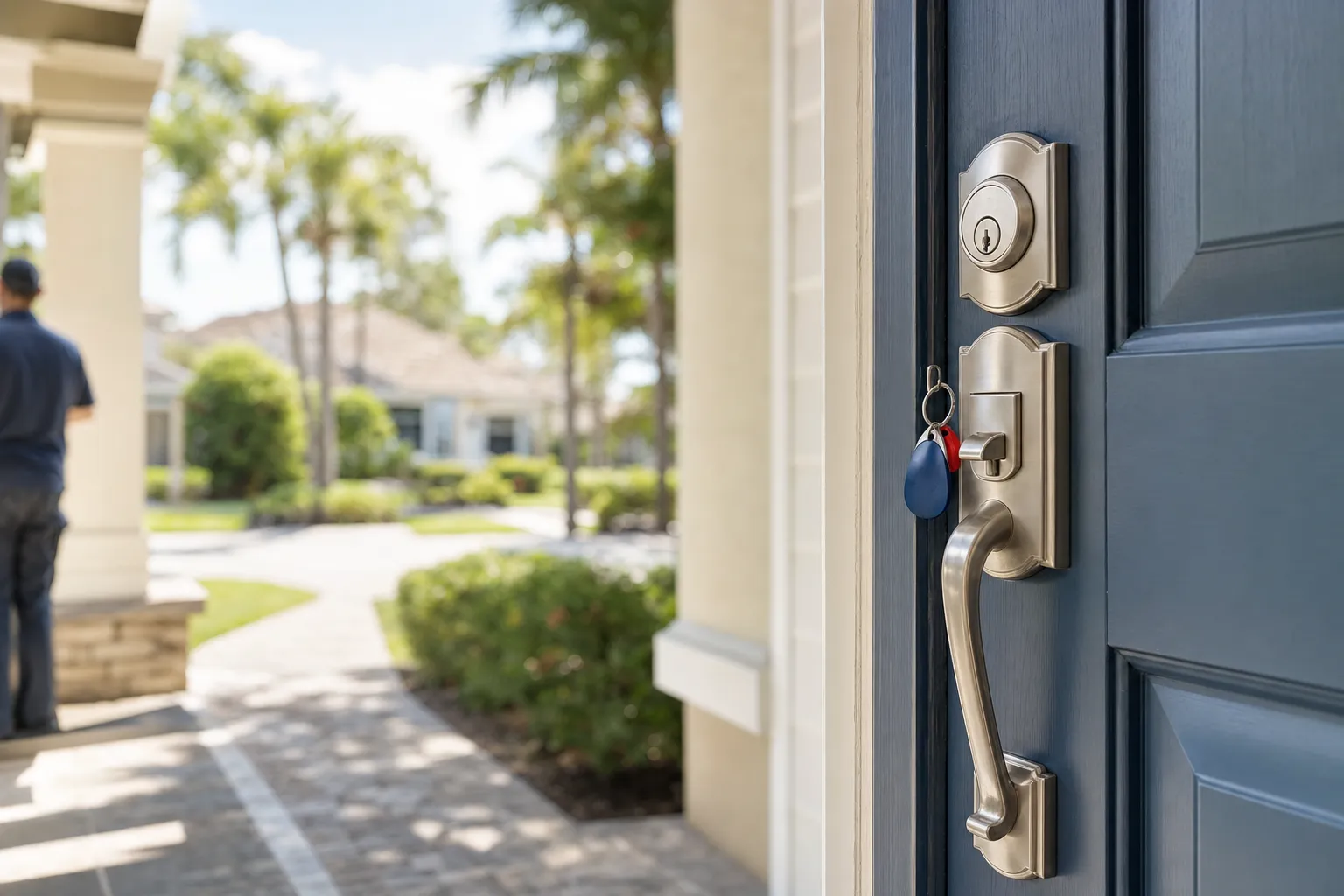
When we review door hardware during a lock installation in Samoset Florida, we first check the door and frame, then match the lock type to your security needs and local code, and finally recommend hardware that fits the door, the use case, and your budget. That gives you a secure, durable installation with fewer callbacks.
What is door hardware selection
Door hardware selection is the process of choosing the mechanical and electronic parts that go on a door, including locks, cylinders, strike plates, handles, and any accessories like weather strips or electronic readers. For a lock installation service we look beyond the lock itself. We assess the door material, frame reinforcement, existing cutouts, and how the door is used every day.
Why door hardware selection matters in Samoset Florida
Samoset and the surrounding Bradenton area have a mix of older homes, modern apartments, and small commercial buildings. A lock that works fine on a new metal door may be a poor fit for a rotted wooden frame or a glass storefront. Choosing the right hardware lowers the chance of failure, improves resistance to forced entry, keeps warranties valid, and helps you meet local building and fire code requirements.
For homeowners and property managers we explain tradeoffs between convenience and security. For businesses we consider traffic patterns, key control needs, and integration with existing systems. Our goal is to recommend a solution that performs well for the way the door is used, not just the most expensive option.
Key concepts we evaluate
- Door material and thickness. Solid wood, hollow core, metal, and fiberglass doors all accept hardware differently.
- Frame condition and reinforcement. A strong lock requires a secure frame and correct strike plate alignment.
- Lock type compatibility. Deadbolts, cylindrical locks, mortise locks, and electronic locks have different installation needs.
- Backset and bore size. The distance from the door edge to the center of the bore hole and the hole diameter determine what hardware fits without modification.
- Security grade and key control. We discuss ANSI grade ratings and whether restricted keyways or master keying are appropriate.
- Weather and environment. Coastal humidity around Bradenton can affect finishes and moving parts, so corrosion resistance matters.
How we evaluate a door during a lock installation review
- Visual inspection. We inspect the door, frame, hinges, and existing hardware for wear, rot, misalignment, and previous repairs. This tells us if reinforcement or weather sealing is needed.
- Measurements and fit check. We measure door thickness, backset, bore hole diameter, and clearance around the jamb to confirm which locks will fit without major modification.
- Security needs assessment. We ask how the door is used, who needs access, and whether you need key control, master keying, or electronic access linked to a business schedule.
- Compatibility review. We match lock styles to the door and frame. For commercial doors we consider heavy duty or mortise hardware. For residences we weigh deadbolt options and keyed versus keyless entry.
- Code and egress check. We verify that the selected hardware will meet local code for means of egress and fire safety where applicable.
- Recommendation and next steps. We explain options, show sample hardware when possible, and outline any additional work such as reinforcing the frame or adjusting the door.
Pro tip: Keep copies of your existing key blanks and any lock model numbers before a visit. That helps us confirm compatibility quickly and speeds the installation.
Common lock types and where we recommend them
Choosing a lock type depends on the door, the level of security required, and how you want to manage keys or access.
| Lock type | When we recommend it |
|---|---|
| Single cylinder deadbolt | Most exterior residential doors where simple, reliable security is the priority and a keyed exterior with thumb turn interior is acceptable. |
| Double cylinder deadbolt | Doors with adjacent glass where extra security is needed, but consider egress and code restrictions before choosing this option. |
| Cylindrical entry set | Interior and light commercial doors, where quick installation and moderate security are needed. |
| Mortise lock | High traffic commercial doors or historic doors that already accept a mortise pocket and where durability and serviceability matter. |
| Electronic or smart locks | When you want keyless entry, temporary access codes, or integration with building access systems; consider battery life and coastal corrosion protection for outdoor units. |
Tradeoffs and common questions
Should I rekey or replace a lock when installing new hardware?
Rekeying is often the right choice when the lock mechanism is in good condition and you only need a new key set. We recommend replacement when the cylinder is worn, the bolt is damaged, or you want a different lock type. See our explanation of Rekey Vs Replace for details on how we decide.
Do I need a reinforced strike plate or door reinforcement?
Yes, a sturdy strike plate and reinforced frame greatly improve resistance to forced entry. If the frame is weak or the door stop is damaged, we factor that into our recommendation. For many exterior doors we advise strike reinforcement or longer screws into the stud to secure the jamb.
How do local codes affect hardware selection?
Local building and fire codes can influence allowable locking methods, especially for commercial properties and multi unit housing. We review applicable code requirements during the assessment. For background on door hardware and egress standards, see the Florida Building Code on means of egress and related hardware requirements.
What we do not do during a review
We will not perform risky structural work without discussing options first. We also avoid advising on changes that could violate fire or egress code. When a job needs a licensed contractor for structural repair we explain why and coordinate the recommendation, while keeping the lock installation scope clear.
Preparing for your visit
What to have ready
- Tell us if the door has been modified, such as widened or trimmed.
- Share any key samples or lock model numbers you have.
- Note who needs regular access and whether you want keyless or managed access.
- Point out interior concerns like pet doors or storm shutters that affect hardware choice.
Watch out: Installing a double cylinder deadbolt without considering egress can create a safety hazard. We always check local rules and advise on safer alternatives when needed.
Related services and resources
Door hardware selection often connects to other locksmith work. If your project needs additional services we link to those pages so you can learn more.
- Lock Installation Service for full installation and hardware mounting.
- Rekey Locks when you want new keys without changing the entire lock.
- Residential Locksmith Service for home security projects in Bradenton and nearby neighborhoods.
- Commercial Locksmith Service for office and retail access solutions.
- Learn about common lock models and technical terms on our Lock Types page.
Related locations we serve
We conduct these reviews and installations across the Bradenton area, including Samoset and surrounding neighborhoods. For service specifics and local pages see our Bradenton location information.
Helpful external references
When we discuss standards or installation details we rely on established guidance. For background reading see the Wikipedia entry on locksmithing and manufacturer installation guides for specific products. For code related questions consult the Florida Building Code and the manufacturer documentation for the lock model you plan to install.
Key takeaway
A good door hardware selection balances the door and frame condition, lock type, daily use, and local code. Our lock installation reviews in Samoset Florida focus on matching hardware to those realities so the finished installation is secure, durable, and appropriate for how the door is used.
Frequently asked questions
How long does a lock installation review take?
A typical review takes 15 to 30 minutes for a single door. If the door needs framing or structural work we document the findings and outline next steps.
Will you show me the hardware options during the visit?
We bring common hardware samples and can show pictures of compatible finishes and styles. For special order items we explain lead times and why a specific component is recommended.
Can you install electronic locks on older doors?
Often yes, but we check battery compartment access, door thickness, and whether the existing bore can accept the electronic unit. Coastal humidity may require corrosion resistant models for long term reliability.
Do you check code compliance during the review?
We check for obvious code concerns related to egress and fire safety and advise on hardware choices that meet local requirements. For complex code questions we reference the Florida Building Code and coordinate with property managers.
Learn more and check our local profile
Read reviews and get directions on our Google Business Profile, and explore related topics and services on this site to learn more about door hardware and installations.