
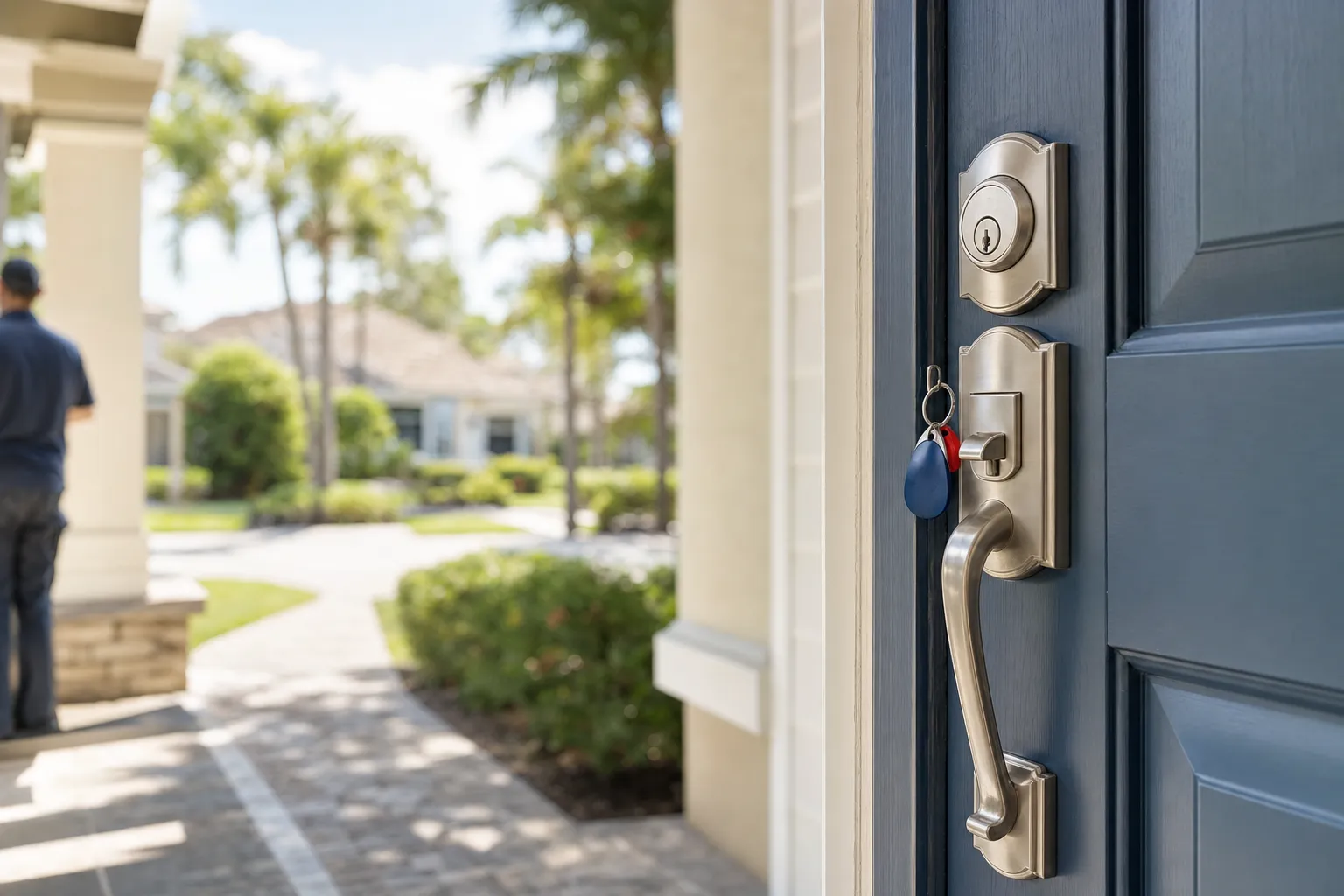
Short answer: the lock type usually determines whether we can rekey your lock, how much security you gain, and the final cost and timeline. At Master Lockey we assess the lock style, cylinder type, and condition before recommending rekeying or replacement so you get the right outcome for your home or business in Samoset Florida.
What we mean by lock types and why it matters
Lock type refers to the mechanical or electronic design that controls access. Common categories include pin tumbler cylinders, deadbolts, mortise locks, wafer locks, and electronic or smart locks. Each type behaves differently when you ask for a rekey, and that affects the result you will see and the options we recommend.
When you tell us you want a rekey, we consider a few practical questions: is the cylinder a removable standard cylinder, is the hardware worn or corroded, and does the lock include an electronic component. Those answers shape whether rekeying is the most secure and cost effective choice.
How common lock types change rekeying outcomes
Below we describe typical lock types you will find in homes and small businesses around Samoset and what they mean for rekeying.
- Pin tumbler cylinders. The most common residential cylinder. These are usually straightforward to rekey because pins inside the cylinder are replaceable. A successful rekey restores key control without replacing the whole lock.
- Single and double cylinder deadbolts. Most deadbolts use a pin tumbler cylinder, so rekeying is usually simple. If the deadbolt uses an integrated or proprietary cylinder, we may need specific parts or recommend replacement.
- Mortise locks. Found on older or higher traffic doors. Mortise cylinders can be rekeyed, but they often require different tools and longer labor. If the mortise lock body is worn, replacement may be the better long term choice.
- Wafer and tubular locks. Often found on interior doors and some older hardware. Some wafer designs can be rekeyed, but others have one piece cartridges that are easier to replace than to rekey.
- High security and restricted key systems. These cylinders have controlled keyways and special pinning. Rekeying is possible but may require factory parts or certified blanks. We check key control restrictions before proceeding.
- Electronic and smart locks. Many electronic locks separate the mechanical cylinder from the electronic module. If the cylinder is standard, we can rekey it. If the lock uses an integrated electronic cylinder or non serviceable core, rekeying the mechanical portion may not change access that is managed by software or a keypad.
Key concepts that determine rekey success
- Cylinder removability. Removable cylinders are faster and lower cost to rekey. Fixed or integrated cylinders may need disassembly or replacement.
- Key control and restricted blanks. Restricted systems limit who can legally copy keys. Rekeying helps lost key problems, but restricted systems may require ordering authorized parts.
- Wear and corrosion. A badly worn cylinder can bind after rekeying. In those cases replacement gives more reliable security.
- Compatibility with hardware. Some keyed knobs, panic hardware and commercial locks use nonstandard cores. We verify compatibility before rekeying to avoid surprises.
How we decide between rekeying and replacing
We never recommend rekeying just because it is cheaper. Our decision balances security, longevity and your goals. Typical factors we weigh include the age and condition of the lock, whether the cylinder is a standard profile, and whether you want upgraded key control.
- Inspect the lock and door. We check cylinder type, visible wear, and whether the lock is part of exit hardware or an electronic assembly.
- Confirm key control needs. If you need restricted keys or a master key system, we verify what parts are required.
- Explain options. We outline rekey, cylinder replacement, or full lock replacement and the tradeoffs for security and cost.
Comparison of common lock types and rekeying outcomes
| Lock type | Rekey possible | Typical notes |
|---|---|---|
| Pin tumbler cylinder | Yes | Fast, economical, good security if cylinder is in good condition |
| Deadbolt with proprietary cylinder | Sometimes | May need specific parts or cylinder swap |
| Mortise lock | Yes, with special tools | Longer labor, consider replacement if worn |
| Wafer tubular lock | Sometimes | Interior hardware may be cheaper to replace than to rekey |
| Integrated electronic lock | Depends | Mechanical rekeying may not control electronic access |
What you should tell us before we arrive
Checklist for scheduling a rekey assessment
- Which door or doors need new keys and whether they are exterior or interior
- Whether you have the existing keys and how many copies you want
- Any master key or restricted key requirements
- Known issues like sticking cylinders, rust, or damaged hardware
Pro tip: If you plan to change several locks to one key, bring a list of the doors and any existing master key setup. That helps us show the best master key options and avoid unnecessary hardware swaps.
Common questions people ask about lock types and rekeying
Below are common concerns we hear from homeowners, property managers and small business owners in Samoset and nearby Bradenton and Sarasota.
- Will rekeying stop old keys from working? Yes, when we rekey a cylinder we change the interior pinning so previous keys will no longer operate that cylinder.
- Can every lock be rekeyed? Not every lock. Most pin tumbler and mortise cylinders can be rekeyed. Integrated electronic cylinders and some wafer cartridges may need replacement instead.
- Does rekeying improve security? Rekeying restores key control. For a security upgrade you may also want a higher grade cylinder or a restricted key system.
- How does rekeying relate to master key systems? Rekeying is often the way we implement a master key system, by pinning multiple cylinders to work on a common master key while keeping individual keys unique.
Related services and topics
Rekeying often ties into other locksmith work we provide. If you need any of the services below we manage the coordination so the final setup works as a system.
- Rekey Locks for single doors or a whole property
- Lock Installation Service when replacement is the better option
- Residential Locksmith Service for home security reviews and upgrades
Related locations and local considerations
We serve homeowners and property managers in Samoset, Bradenton, Sarasota and surrounding neighborhoods. In coastal Florida, humid conditions accelerate wear on older cylinders. We account for local climate and building styles when recommending rekeying versus replacement.
See our locations page for details about the areas we serve and to find the nearest mobile technician.
Helpful resources and next steps
If you are researching lock types and how they affect access control, our Lock Types topic page explains cylinder profiles, commercial standards, and key control options in more depth. For questions about scheduling or mobile service availability, see our main site page.
Pros
- Rekeying retains existing hardware when possible
- Quick resolution for lost or stolen keys
- Affordable key control for homes and small businesses
Cons
- Not all locks are suitable for rekeying
- Old or corroded cylinders may need replacement
- Electronic access may need separate configuration
Key takeaway
The lock type shapes whether rekeying is practical, how much security improves, and whether a replacement or cylinder swap is wiser. We assess cylinder type, condition and any electronic components before recommending rekeying so you get a reliable, long lasting result.
Frequently asked questions
Can every deadbolt be rekeyed?
Most deadbolts with a standard pin tumbler cylinder can be rekeyed. If the deadbolt uses a proprietary or integrated cylinder we may need to swap the cylinder or replace the lock. We inspect the hardware first and explain the options.
Will rekeying stop copies of old keys from working?
Yes. Rekeying changes the internal pinning so previous keys no longer operate that cylinder. If keys are missing from multiple locks we can rekey a suite to a single new key if you prefer.
Does rekeying work with smart locks and keyless systems?
It depends. Many smart locks separate the mechanical cylinder from the electronic module. Rekeying the mechanical cylinder will change any physical key access, but it will not alter electronic or app based permissions. We review both mechanical and electronic access when you have a smart lock.
How long does rekeying take for a typical home?
For one or two standard cylinders, rekeying is usually completed in a short visit. Mortise locks, restricted key systems or multiple door projects take longer. We explain estimated time during the assessment.
Find more on our Google Business Profile and on this site
Read customer reviews and get directions on our Google Business Profile to learn how we respond in your neighborhood. To learn more about lock designs and options, explore related pages on our site.