
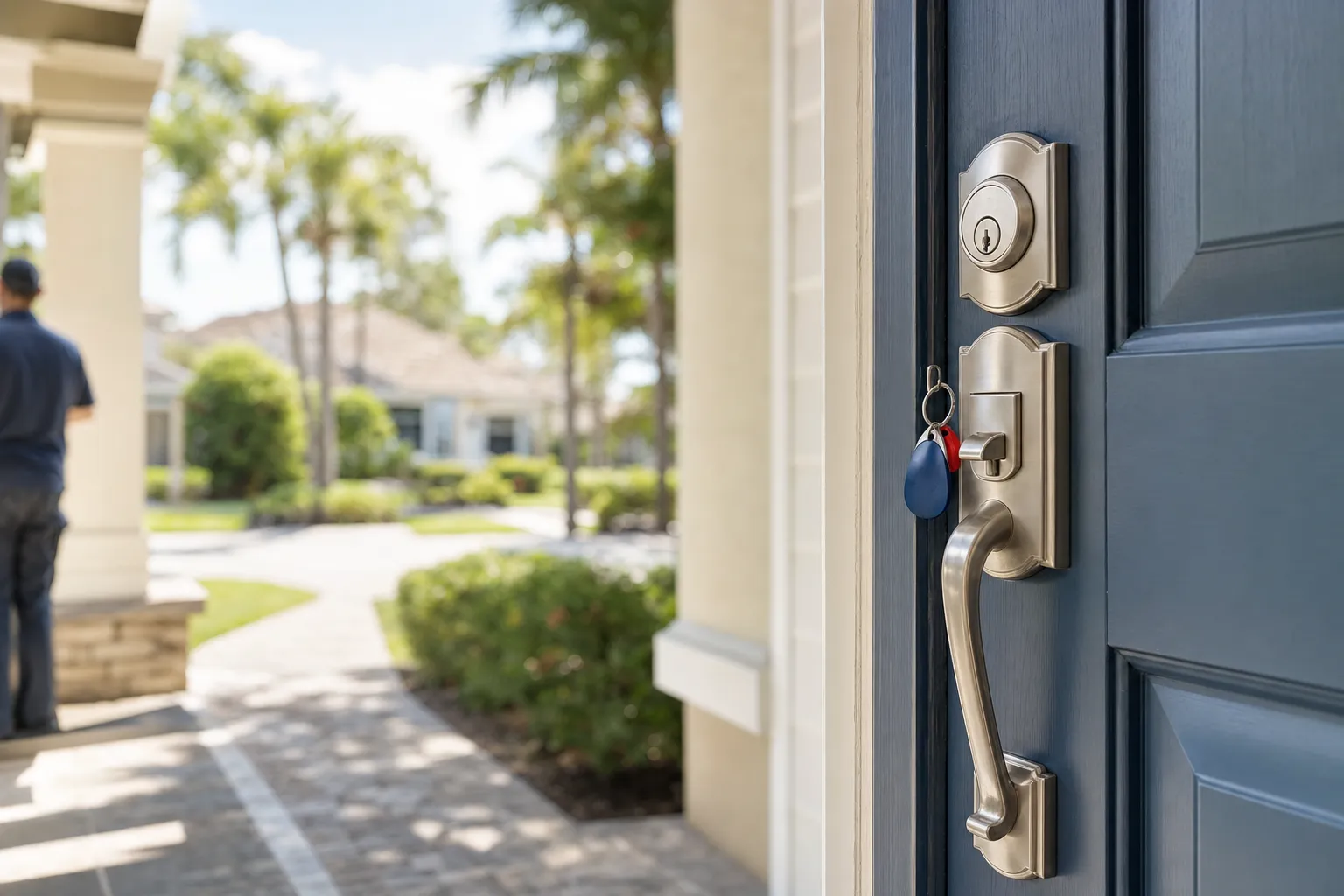
You should take a closer look at emergency lockout service when a single lockout becomes a pattern, when you cannot confirm lawful access, when recent repairs failed, or when entry risks damage to a door or vehicle. We find those situations happen often in Fullers Earth and they call for an inspection of access protocols, not just a quick entry.
What we mean by Emergency Access Protocols
Emergency Access Protocols are the steps and rules a household, building, or vehicle owner follows when someone is locked out or when authorized access is needed in an urgent situation. These protocols cover who can open a door, what identification is needed, how keys are stored or duplicated, and how an outside locksmith is authorized to act.
At Master Lockey we treat these protocols as a safety and liability issue as well as a technical one. When we review a protocol we look at the human steps, the hardware and the documentation that proves who has authority to enter.
Why this matters in Fullers Earth and nearby areas
Local factors change how we handle emergency lockouts. Fullers Earth has a mix of older homes, rental properties, and small commercial sites. That variety means different door hardware, vehicle types, and property rules. A quick entry method that works for a single family home may not fit a rental unit, a gated community, or a storefront.
We also consider Florida specific issues, like coastal humidity that speeds hardware wear and local building practices for exterior doors. Our response plans for Bradenton and Sarasota area customers reflect those realities so we can resolve problems without creating new ones.
Key concepts to understand
- Authorization. Who is permitted to grant entry and how that permission is verified.
- Hardware condition. Whether locks and cylinders are worn, corroded, or mismatched to the door or vehicle.
- Entries that cause damage. When forcing entry risks broken glass, warped frames, or damaged ignition components.
- Repeat lockouts. When the same person or location produces repeated calls, suggesting a process issue not a single failure.
- Documentation. Records that show key ownership, rekey dates, or master key plans for commercial properties.
Common warning signs that a closer look is needed
Warning signs
- Multiple lockouts at the same address or vehicle within a short time.
- Different people claiming access but with no consistent proof of authorization.
- Locks that stick, turn roughly, or require excessive force.
- Recent lock changes or repairs that did not fix the underlying problem.
- Visible tampering, broken key fragments, or damaged door frames.
- High value assets or sensitive areas behind the door, such as server rooms or medication storage.
What we inspect when we review an emergency lockout situation
- Confirm lawful access. We ask for identification and documentation describing ownership or authorization. For tenants we check lease documentation when available. For businesses we review authority lists and master key records.
- Assess hardware. We examine the lock type, cylinder condition, strike plate alignment, and frame integrity. For vehicles we confirm key type and ignition condition before attempting entry.
- Check duplication and key control. We review how many keys exist, who holds them, and whether any keys were recently duplicated without notice.
- Consider non destructive options. We prefer methods that avoid drilling, cutting, or damaging surfaces when possible.
- Recommend protocol changes. If repeated lockouts stem from process gaps we suggest adjustments to key control, access lists, or hardware upgrades.
How emergency lockout needs differ across property types
Not every lockout is the same. Here is how needs usually differ.
- Homes. Single family homes often need good key control and weather resistant hardware. We look for worn doorknobs and poor strike alignment.
- Rental properties and HOAs. These require clear authorization and careful documentation. Tenants change frequently, so rekey scheduling is often necessary.
- Small businesses. Commercial properties may use master keying or restricted cylinders. We check master key records and coordinate minimal disruption to operations.
- Vehicles. Car lockouts sometimes involve transponder keys or immobilizers. We review the vehicle key type before any work and link to related services when replacement or programming is needed.
Related services that often matter
When we audit emergency access we often recommend or perform other services depending on what we find. Those services include:
- Emergency Lockout Service for immediate safe entry options.
- Car Key Replacement when a key is lost or an ignition needs a new programmed key.
- Key Fob Programming for remote entry replacements or reprogramming after a theft or loss.
- Rekey Locks to change who can open doors without replacing hardware.
Practical examples from local cases
We commonly see two patterns that require a closer look. First, rental units with turnover where old keys remain in circulation. Second, older homes on narrow or warped frames where the lock works intermittently. In both cases we document the cause, outline conservative entry options, and recommend changes that reduce future emergency calls.
Pro tip: Keep a brief key log for rental properties. Note who received keys and when. That simple step reduces confusion and makes any emergency access review much faster.
When a quick entry is not the right choice
Some situations force us to slow down before opening a door. Examples include:
- Unclear legal authority, such as a dispute between property owners and tenants.
- Potential evidence of forced entry or criminal activity.
- Locks that when forced will cause expensive damage to frames or vehicles.
- Access that could expose confidential business information.
In those cases we document the problem, advise on safe next steps, and if necessary coordinate with the property manager, HOA board, or police before proceeding.
Local resources and standards
For background on locksmith work the industry and public resources are useful. The Wikipedia locksmith entry describes common lock types and locksmith history. The national trade group for our field provides guidelines on professional practice. For state level consumer guidance we refer to official Florida consumer protection resources that cover safe hiring practices for locksmiths and how to avoid scams.
When you want to read more, we recommend these resources for context and safe hiring tips.
- Locksmith, Wikipedia
- Associated Locksmiths of America
- Official Florida consumer protection resources on hiring locksmiths. Check your state consumer protection site for current guidance.
How we handle an emergency access protocol review
- Initial assessment. We gather basic information about the lockout and any recent changes to keys or access lists.
- On site inspection. Our technician inspects the hardware and checks authorization documents.
- Non destructive entry if needed. If lawful access is confirmed and entry is necessary, we use the least invasive method that will not harm the door or vehicle.
- Report and recommendations. After the call we provide a clear explanation of what happened, what we did, and practical next steps to prevent recurrence.
Our technicians are licensed and insured, and they carry parts for common repairs. We focus on solving the root cause so you get fewer emergency calls in the future.
Related locations and service area notes
We serve Fullers Earth and surrounding communities from our Bradenton base. If you are in Fullers Earth we take local factors into account, such as door styles common in the neighborhood and rental turnover patterns. You can also find related location pages for nearby areas to see specific guidance for those communities.
Related topics to explore
These pages go deeper into subjects we reference here:
- Emergency Preparedness for houses and businesses.
- Transponder Keys and vehicle ignition concerns.
- Remote Key Fobs and programming issues.
Key takeaway
Key takeaway
If lockouts repeat, authorization is unclear, or entry risks damage, you need a formal emergency access protocol review. We focus on confirming lawful access, preserving property, and recommending practical changes so you get fewer emergency calls in the future.
Frequently asked questions
How quickly should I call for an inspection if lockouts keep happening?
If several lockouts occur within weeks, arrange an inspection as soon as convenient. Repeated calls usually indicate a process or hardware issue that will get worse if left unchecked.
Will you force a door if I call after hours?
We avoid destructive entry whenever possible. If lawful access is confirmed and non destructive methods will not work, we will explain the options and the likely impact before proceeding.
What documents should I have ready when you review access protocols?
Ownership evidence, lease agreements for rental properties, master key or key control records for commercial sites, and any recent service receipts help us verify authorization quickly.
Do you handle vehicle lockouts that involve transponder keys?
Yes. We assess the vehicle key type and if a programmed transponder is required we switch to the appropriate service. For replacements or reprogramming we may refer to our car key replacement and key fob programming services.
Can rekeying fix repeated lockouts?
Rekeying can reduce unauthorized duplication and simplify key control, but it does not address hardware problems or process gaps. We consider rekeying as one part of a complete protocol review.
Where can I read official guidance about hiring a locksmith in Florida?
State consumer protection pages offer tips on hiring locksmiths and avoiding scams. We also reference industry guidance from trade organizations and background material on locksmithing practices.
Check our local profile and learn more
Read customer reviews and get directions on our Google Business Profile to see how we respond in the Bradenton area. To explore related topics and services on our site, visit the Fullers Earth location page or our Emergency Lockout Service page.