
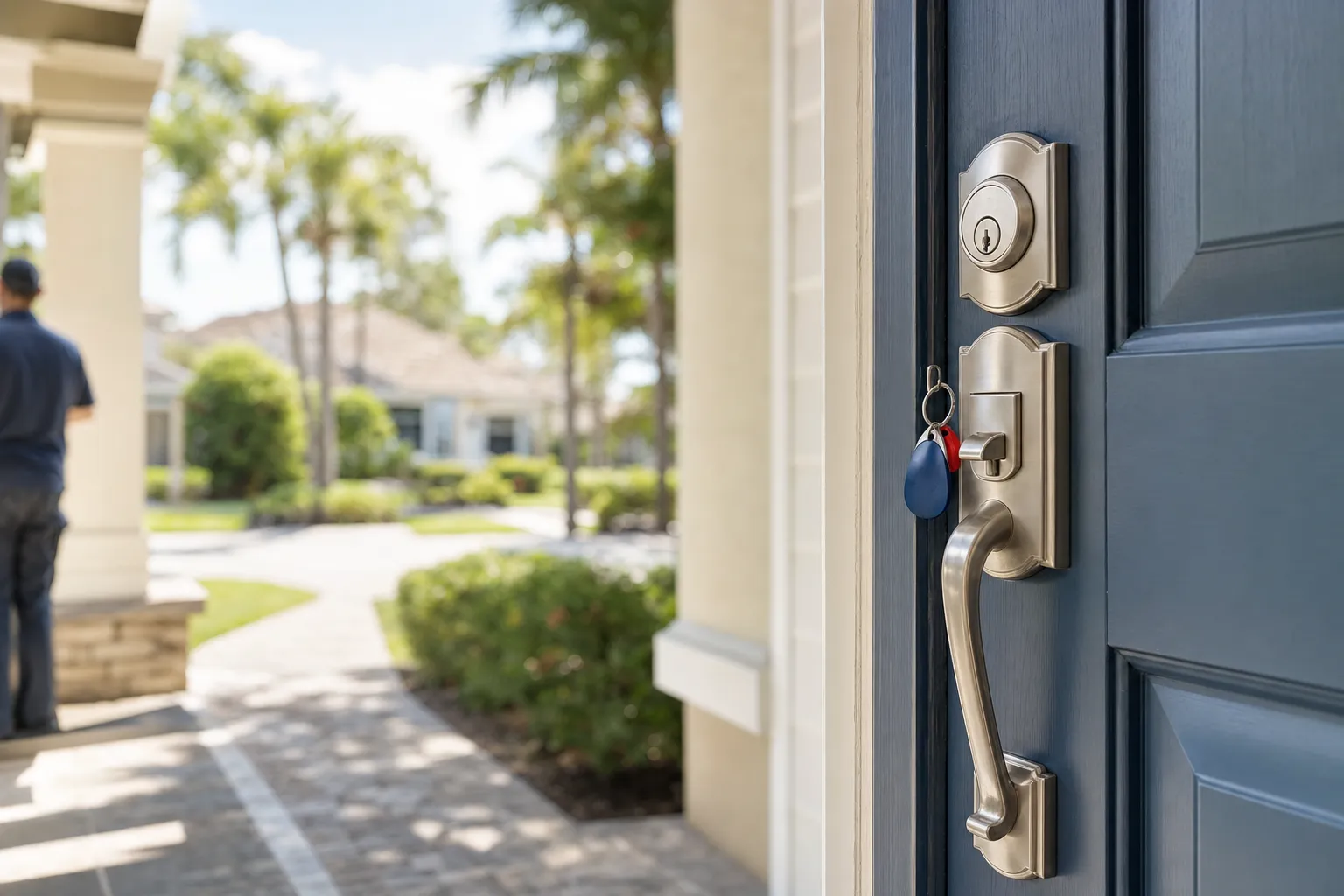
If you have a household safe that needs service, we inspect the lock and door, attempt non destructive opening when possible, then recommend repair, rekey or replacement based on the safe condition and your security needs. That is how safe basics shape a residential locksmith visit in Ellenton Florida.
What safe basics means for homeowners in Ellenton Florida
By safe basics we mean the common features and limits of everyday home safes: the locking mechanism type, the boltwork and door seal, whether the lock is mechanical or electronic, and how the safe is mounted or installed. These elements determine what we can fix on site, how long the work takes, and whether a non destructive opening is feasible.
At Master Lockey we treat safe service as part of our residential locksmith work. Our technicians from Bradenton bring experience with common household safes and the tools needed to diagnose lock problems while minimizing damage. We serve Ellenton and surrounding communities and tailor our recommendation to the property and to how you use the safe.
Why safe basics matter when a locksmith is involved
Safe basics matter because they set expectations. Two quick points we tell homeowners up front are:
- Opening method depends on the lock type. Mechanical dial locks, electronic keypads, and tubular locks each have different non destructive options.
- Mounting and condition influence repair versus replacement. A floor mounted, rust free safe with a working lock is usually repairable. A water damaged or heavily corroded safe may need replacement for reliable security.
Understanding these basics helps you decide what outcome you want, and it helps us plan the correct technicians and parts for the job.
Key concepts we check during a safe service visit
- Lock type and access method. Is the safe secured by a mechanical dial, an electronic keypad, or a cartridge style lock? Each calls for different tools and parts.
- Bolt and door condition. We inspect bolt movement, door alignment, and seals to judge mechanical wear or corrosion.
- Mounting and location. How the safe is anchored affects removal options and whether we can work on it onsite.
- Owner verification and documentation. We confirm ownership or authorization before starting work, and we note combination or code change limitations for manufacturer controlled systems.
What we do, step by step
- Initial inspection. We examine the exterior, lock type, mounting, and any visible damage. This establishes whether a non destructive approach is reasonable.
- Non destructive opening attempts. When possible we use diagnostic tools and techniques that avoid damaging the safe. Many home safes can be opened this way.
- Repair or rekey on site. If the lock or boltwork is serviceable, we perform repairs or swap the lock and rekey when the mechanism allows it.
- Replacement recommendations. When damage, obsolete parts, or poor security make repair unwise, we explain replacement options and what to expect from a new unit.
What we inspect during a safe service visit
Onsite checklist
- Lock type and visible wear on dial or keypad
- Bolt movement and door alignment
- Mounting anchors and surrounding structure
- Signs of water or fire damage
- Accessibility for non destructive tools
- Documentation of ownership or authorization
Comparing common approaches to gaining access
| Method | When we use it | What to expect |
|---|---|---|
| Non destructive opening | Functional lock components, accessible boltwork | Minimal cosmetic impact, faster return to service |
| Lock replacement or rekey | Worn lock, owner wants new combination or key control | Secure result with new keys or code, may require compatible lock parts |
| Controlled destructive entry | Severe corrosion, seized bolts, or where non destructive methods fail | Safe is damaged and may need professional repair or replacement |
How safe basics connect to other locksmith services
Safe work often overlaps other residential locksmith needs. For example, if a safe is bolted into a floor or built into cabinetry, our residential locksmith service work coordinates with door and hardware considerations. If access is urgent and the homeowner cannot reach keys, our emergency lockout service experience helps manage timing and authorization. For safes moved between properties, our mobile locksmith service capabilities let us work at your location in Ellenton or elsewhere in our service area.
We also refer homeowners to our topic page on Safe Basics when they want a deeper overview of lock types and safe features before deciding.
Pro tip: If your safe uses an electronic lock, check the battery compartment and any manufacturer reset instructions before scheduling service. That simple check can avoid an unnecessary visit if the issue is a drained battery.
Common questions we hear about home safes
- Can you reset an electronic code without the original code? In many cases we can, but some manufacturers lock the system to owner credentials and require proof of ownership or factory assistance.
- Is rekeying a safe like rekeying a door lock? Not always. Some safes have modular, changeable locks that accept new keys. Other safes use integrated mechanisms that require replacement of the entire lock cartridge.
- Will opening the safe damage my contents? We avoid methods that risk contents whenever possible. If destructive entry is required, we discuss containment and mitigation steps first.
Related services and when they matter
Safe service can intersect with these other offerings depending on the situation:
- Rekey locks for the home when you change ownership or after a lost key. See our rekey locks page for details.
- Lock installation service when a safe needs a new lock type for better access control, see lock installation service.
- Car key replacement or key fob programming when a vehicle key is kept in a safe that cannot be opened before travel, see car key replacement and key fob programming.
Local considerations in Ellenton and the Bradenton area
Humidity and coastal proximity can accelerate corrosion in older safes. For homeowners in Ellenton and nearby Bradenton, we pay special attention to seals and mounting hardware that may have suffered from salt air or high humidity. We also consider access routes and parking when planning on site work in tighter neighborhood streets.
Master Lockey operates from Bradenton and serves Ellenton and surrounding locations, so we match travel and tooling to the job. For location details see our Bradenton page at Bradenton Florida.
Key takeaway
Safe basics guide every residential locksmith decision. We inspect lock type, boltwork, mounting and damage, and then choose non destructive opening, repair, rekey, or replacement. For Ellenton homeowners, that approach balances security, cost, and the condition of the safe.
Frequently asked questions
How quickly can a locksmith open a common home safe?
Timing depends on the lock type and condition. If the lock is serviceable and the safe is accessible, many jobs are resolved the same day. When parts need ordering or a safe is severely damaged, additional time may be required.
Are there safe brands or models we cannot service?
We work on the most common household brands and models. Some manufacturer specific electronic systems require proof of ownership or factory support to reset codes. We will tell you in the inspection if a manufacturer restriction applies.
What do you need from me at the visit?
Be prepared to show proof of ownership or authorization for the safe. Also tell us how you have been using the safe and whether the code or key has been changed recently. That information speeds diagnosis and preserves security.
Can a safe be moved during service?
Moving a safe is a separate operation that can increase cost and time. If relocation is necessary, we handle it with appropriate equipment and evaluate whether removal improves access for service.
Learn more and check our local profile
Read our customer reviews and get directions on our local listing, and see related topics and services on this site to learn more about safe basics and residential locksmith work.