
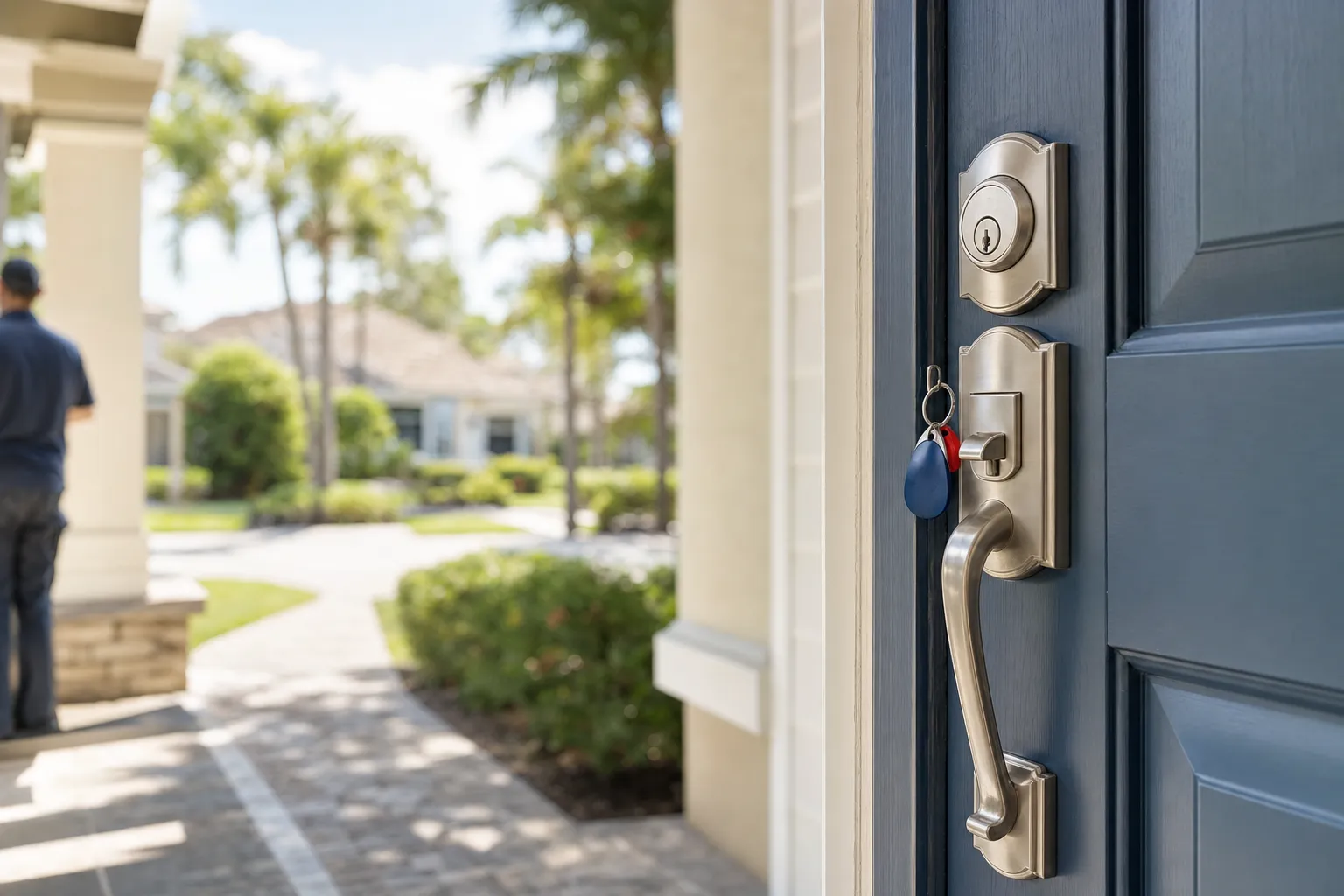
Commercial security standards in Fullers Earth mean practical, verifiable hardware and procedures that lower the risk of unauthorized entry, protect staff and assets, and match insurer and building code expectations. At Master Lockey we inspect door hardware, cylinders, strikes, and access control with those goals in mind and then recommend fixes that fit each property.
What we mean by commercial security standards
When business owners ask about commercial security standards they usually mean three things: reliable locks and door hardware, controlled access to sensitive areas, and a maintenance plan that keeps security working over time. Standards combine industry guidance, manufacturer specifications, and local building features more than a single rule book. For a concise overview of recommended elements see our page on commercial security standards.
We tailor recommendations to the property type. A storefront in Fullers Earth needs strong exterior hardware and panic bar egress, while an office suite may need master key planning and electronic access for staff.
Core components we check on every commercial property
Hardware and lock quality
- Lock grade and cylinder type, including high security or restricted key systems where needed.
- Deadbolts and latch reinforcement, plus strike plates sized and fastened to resist force.
- Door and frame condition, hinge security, and thresholds that affect how a lock performs.
Access and control
- Mechanical master keys versus electronic keyless systems and where each makes sense.
- Audit trails and credential management when electronic access is used.
- Specialized needs such as retail cash office locks, server room control, and fleet key control for managers.
Environmental and local issues
- Coastal corrosion can shorten hardware life in Fullers Earth and nearby Bradenton and Sarasota, so we recommend corrosion resistant finishes and regular checks.
- Visibility and glazing on storefronts, which affect risk of forced entry and the choice of auxiliary hardware.
Minimum expectations for locks and door hardware in Fullers Earth
There is no single statewide lock code, but insurers and property managers routinely look for certain markers of quality. We use those markers when evaluating a site.
- ANSI grade appropriate for the use. Commercial exterior doors usually call for the highest practical grade for the lockset and deadbolt.
- Reinforced strike plates fastened with long screws into the frame, not just the trim.
- Key control for critical areas using restricted keyways or electronic credentials.
- Emergency egress hardware that complies with local fire and building rules, including panic bars where required.
For more on hardware selection see our topic on door hardware selection.
How we assess your property
We use a consistent, nontechnical process so you can compare recommendations and budgets.
- Site survey. We walk every public and secure entry, note lock and frame condition, and look for wear, corrosion, or poor alignment.
- Risk mapping. We identify zones with higher security needs such as cash handling areas, storage rooms, and exterior service doors.
- Options and priorities. We present staged options that separate urgent repairs from upgrades that improve long term control.
- Documentation. We deliver a short report listing hardware, like for like part numbers when possible, and a recommended maintenance cadence.
Pro tip: Keep a simple key control log and a photo inventory of high security cylinders. That record makes future rekey work faster and reduces unauthorized duplicate keys.
When to rekey and when to replace locks
Rekeying preserves existing hardware while changing who can use old keys. Replacing locks upgrades security features or addresses corrosion and wear. Both are common commercial responses depending on condition and risk.
Consider rekeying when keys are lost, staff turn over, or tenants change. Replace locks when hardware is corroded, damaged, not compatible with restricted keyways, or when you need a higher security cylinder. Our rekey locks service and lock installation service pages explain the practical tradeoffs.
Maintenance checklist for commercial properties
Monthly and annual items
- Monthly visual check of exterior locks and latches for corrosion and alignment.
- Quarterly audit of key holders and access credential lists.
- Annual lubrication and function test of mechanical locks, and battery check for electronic readers.
- Immediate action on damaged strikes or loose hinges.
Watch out: Never block or modify emergency egress devices to make a lock work. That creates a safety hazard and can violate local code.
Practical choices for Fullers Earth businesses
Which lock or system is right depends on property use, tenant expectations, and budget. Small retail can get a big security improvement from reinforced strikes, a heavy duty deadbolt, and a monitored alarm. Office buildings often benefit most from controlled mechanical master key systems or an electronic access control setup that records entries.
If you manage multiple properties or need tighter key control for fleet or equipment rooms, plan for restricted keyways or credential based systems from the start. Learn more about electronic access control options on our access control integration topic page.
Common questions property managers ask
- How often should commercial locks be rekeyed? Rekey after tenant changes or when keys are unaccounted for, and audit keys annually.
- Do electronic locks remove the need for mechanical backups? No, you should plan for mechanical override and power loss scenarios.
- Are there local factors in Fullers Earth to plan for? Yes, coastal humidity and storm exposure change material choices and maintenance frequency.
Frequently asked questions
What does ANSI grade mean for commercial locks?
ANSI grades indicate tested performance levels for locksets and deadbolts under industry standards. Grade 1 is highest for heavy duty commercial use, grade 2 is common for lighter commercial and some heavy residential applications. We recommend grade selection based on door use and risk level.
When is a master key system appropriate?
A master key system fits properties that need different access levels, for example cleaning crews, managers, and tenant suites. It simplifies key control but requires careful planning to avoid over granting access.
Can rekeying be done without replacing locks?
Often yes. Rekeying changes the internal pins so old keys no longer work. It is cost effective when hardware is in good condition and the lock type supports rekeying.
How do we balance key control with staff convenience?
Use zone based access, temporary credentials for contractors, and a key log for issued mechanical keys. Electronic credentials can simplify changes without rekeying cylinders.
Key takeaway
Commercial security standards in Fullers Earth are a mix of quality hardware, sensible access control, and a maintenance plan. A clear assessment and staged priorities keep costs manageable while raising security where it matters most.
Learn more and check our local information
Read customer reviews and get directions on our Google Business Profile to see how we handle commercial jobs locally. Explore related resources on our Services hub, our Topics hub, and the Fullers Earth location page to learn more about specific services and nearby coverage.