
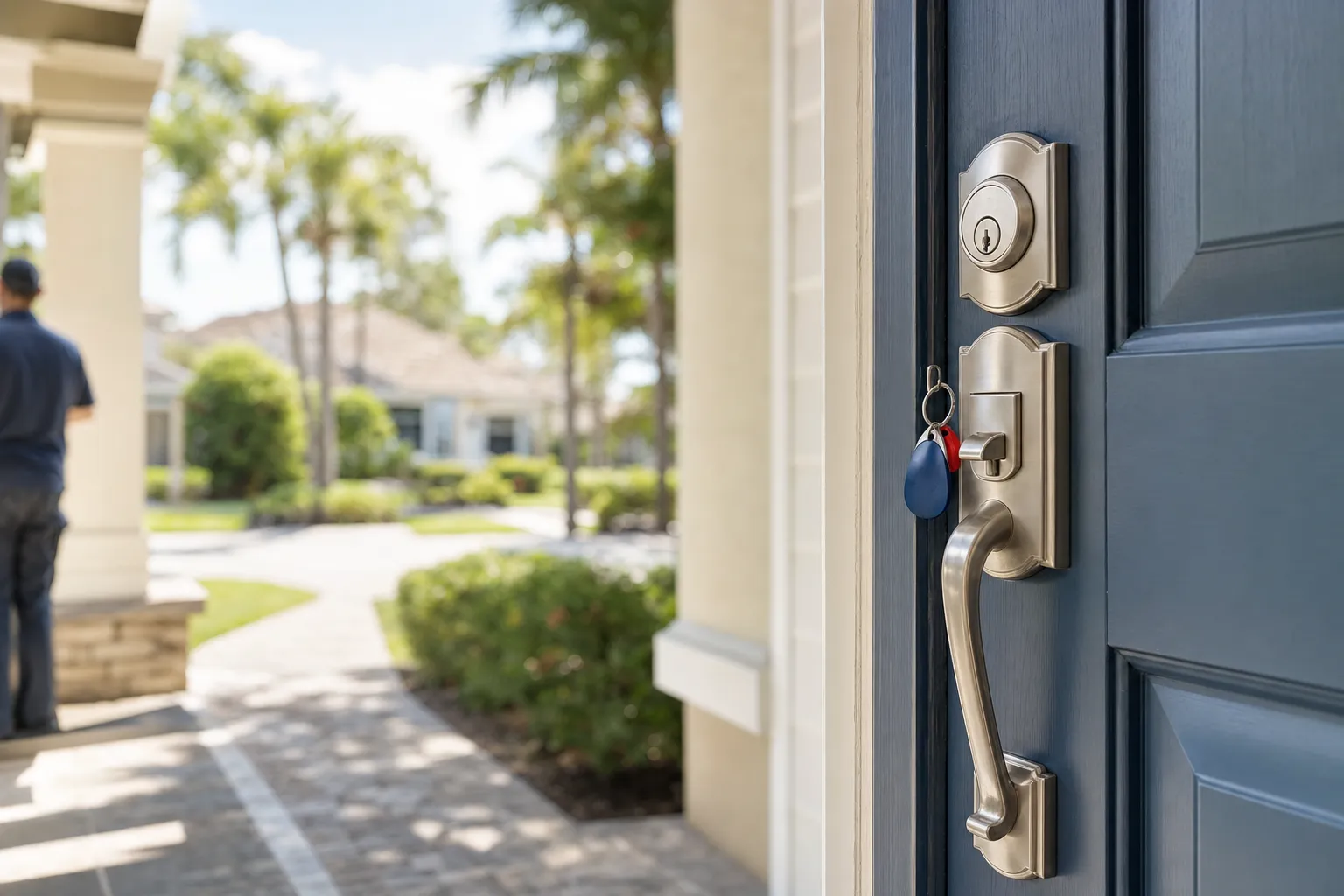
We review lockout safety before an emergency lockout service because it reduces damage, clarifies who may legally allow entry, and makes sure our technician brings the right tools. At Master Lockey we gather key details over the phone, confirm access permissions, and recommend options that keep people and property safe in Ellenton and nearby communities.
What we mean by lockout safety
Lockout safety is the brief, practical review we perform before we arrive for an emergency lockout. It covers three things: who is authorized to open the door, what type of lock or key is involved, and any hazards or special conditions at the location. That simple review guides how we approach the job, which tools we bring, and whether a damage minimization plan is required.
Lockout scenarios vary. At a house you might have a deadbolt, a smart lock, or a keyed entry knob. For vehicles the issue could be a locked door, a broken key, or an electronic transponder key. For commercial properties you might be dealing with master key systems, panic hardware, or electronic access control. When we explain these distinctions up front we can resolve the situation faster and more safely.
Learn more about our approach to Lockout Safety and why those details matter for the response you get.
Why review lockout safety before an emergency call matters
- Faster resolution, because we send the right technician with the right equipment.
- Less damage, since we plan non destructive entry methods when possible.
- Clear legal access, so we avoid property disputes and respect tenancy or business rules.
- Safety for occupants and technicians when hazards exist, for example dogs, unstable doors, or electrical lock components.
- Documented options, so you can decide between rekeying, replacement, or repair after the incident.
Those benefits are why we ask a few targeted questions on the call before dispatching our mobile team for an Emergency Lockout Service in Ellenton, Bradenton, or surrounding neighborhoods.
How we review lockout safety during an emergency call
- Identify who needs access. We ask whether the caller is a homeowner, tenant, fleet manager, property manager, or a licensed representative for a business. That helps us confirm authorization and avoid inadvertent entry.
- Confirm the exact location and entry point. We ask which door or vehicle is affected and whether any gates, garages, or secondary locks are involved. Exact location details speed arrival and reduce confusion.
- Describe the lock or key. Tell us if the lock is a standard deadbolt, a rim cylinder, a smart lock, or an electronic keypad. For vehicles, provide make, model, year, and whether the key is a transponder or a remote key fob. This information lets us choose the proper equipment.
- Note signs of forced entry or damage. If locks look damaged or there are signs of tampering, we treat the situation differently to preserve evidence and protect occupants.
- Flag safety concerns. Let us know about pets, stairs, medical needs, or hazardous conditions on site so our arrival is safe for everyone.
- Plan for follow up. We discuss whether a rekey, lock replacement, or additional security upgrade might be a sensible next step, and we explain your options.
Common red flags we look for and why they change our response
During the review we listen for clues that change how we approach the call. Common red flags include:
- Broken key lodged in the cylinder, which may need extraction tools and a spare key or rekeying afterward.
- Smart lock offline or low battery, requiring a different entry method and battery replacement plan.
- Evidence of forced entry, which we document and avoid disturbing while making entry as safely as possible.
- Master key systems or restricted keyways, which may require additional authorization or specialized tooling.
- Vehicle ignition issues or immobilizer problems that point toward Car Key Replacement rather than a simple door unlock.
What we ask you to have ready before we arrive
Before we get there
- Proof of ownership or a way to verify authorization for entry.
- Identification for the person meeting the technician.
- Vehicle make, model, and year when the lockout involves a car.
- Photos of the lock or key if available, to help us identify the hardware in advance.
- Alarm codes or gate instructions if access requires them.
Pro tip: A quick photo of the lock or the inside of your vehicle console taken with your phone can save time and help us bring the correct gear on the first trip.
Watch out: Avoid sharing door codes or access information publicly or with unverified services. We verify authorization on every job and carry licensing and insurance information to protect you and your property.
How our field workflow protects property and speeds resolution
When our technician arrives we do a short onsite review to confirm the phone intake, inspect the lock or vehicle, and present the least disruptive plan. That may be a non destructive entry method, a controlled cylinder removal, or a plan to extract a broken key. If replacement or rekeying is the right next step, we explain the differences and what to expect.
What good looks like after we finish
- The lock opens without unnecessary damage when possible.
- We document the condition of the lock and the steps taken.
- You receive a clear recommendation, for example rekeying with our Rekey Locks service, upgrading to a more secure cylinder, or scheduling a lock installation.
- For vehicles, we explain whether a replacement key or key fob programming is needed and link to the appropriate follow up service.
When a review suggests rekeying or replacement
Not every lockout is the same. If we find a compromised lock, a worn cylinder, or a lost master key, rekeying may be the right next step to restore security without full replacement. In other cases, damaged hardware or high security needs call for a new lock installation. We describe the tradeoffs so you can make an informed choice that fits the property and the budget.
Master Lockey is licensed and insured, and we explain both options plainly so property managers, HOAs, and homeowners know what to expect.
Key takeaway
Reviewing lockout safety before a response saves time, reduces damage, and protects people and property. A short call with the right details lets us bring the correct tools, confirm authorization, and recommend sensible next steps like rekeying or replacement.
Frequently asked questions
What information should I give when I call for an emergency lockout?
Tell us who needs access, the exact location and entry point, the type of lock or vehicle, and any safety concerns such as pets or alarms. If you have photos of the lock or the key, that helps us choose the right tools.
Will you try to force the lock open?
We prefer non destructive entry methods whenever possible. If a lock is damaged or forced, we will explain why a partial removal or replacement is necessary and document the condition before proceeding.
Do you handle smart locks and electronic key fobs?
Yes. We work with smart locks, electronic keypads, and remote key fobs. For vehicle key fobs and transponder keys we may recommend Key Fob Programming or Car Key Replacement when the electronic system is the root cause.
What if I do not have proof of ownership at the moment?
We verify authorization before making entry. If immediate proof is not available we can discuss alternative verification steps, but we will not perform entry without appropriate authorization from an owner or authorized representative.
How do you handle commercial or master key systems?
Commercial systems and master key setups require additional precautions. We confirm authorization, coordinate with property management if needed, and document any changes. For larger systems we may recommend a scheduled review after the emergency to address ongoing security needs.
Where to learn more and check our local presence
Check Master Lockey on Google Business Profile to read customer reviews and get directions. For more detail about our approach, see our Emergency Lockout Service page, our topic page on Lockout Safety, and our local information for Bradenton, Florida.
For questions about related services, explore our pages on Rekey Locks and Car Key Replacement.