
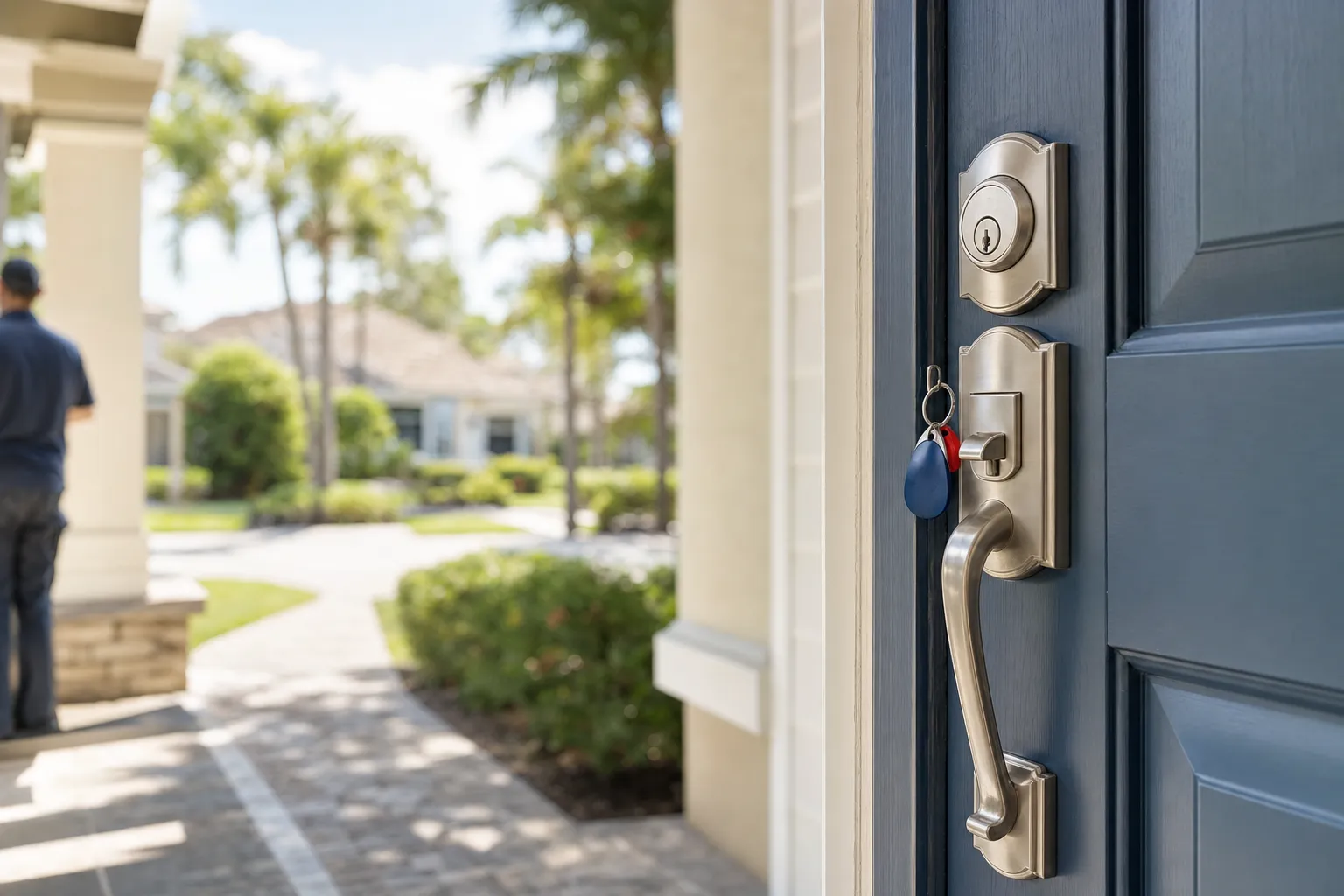
Tenant turnover security means removing access for former tenants when someone moves out. At Master Lockey we recommend rekeying or replacing the unit locks whenever tenancy changes in Braden Castle, Florida, because unchanged locks are a common and avoidable security gap.
Why tenant turnover security matters
Property turnover is more than swapping keys. Former tenants, subletters, contractors, and visitors may still have keys or key copies. That creates liability, theft risk, and complications for the next occupant. For property managers and landlords in Braden Castle and nearby neighborhoods, a clear turnover process reduces disputes, speeds reoccupancy, and prevents return visits for unexpected lock problems.
When we handle turnover work we treat each unit as a separate security decision. That helps preserve tenant privacy and protects your property.
Common misunderstandings we see
These are the most frequent assumptions that cause problems during tenant changeover.
- Assuming returned keys are the only keys in circulation, when tenants often copy keys.
- Thinking a simple lock cylinder cleaning or a latch adjustment is enough to change access.
- Believing electronic key codes or smart locks do not need a formal reset after a tenant leaves.
- Expecting the outgoing tenant to remove their own access for shared systems such as key fobs or building access cards.
- Waiting until a new tenant moves in before addressing potential key control issues.
Rekey versus replace: how to decide
The right choice depends on the lock condition, key control, and your long term plan for the property. Rekeying changes which keys operate an existing cylinder, while replacing installs a new cylinder or lockset.
For a quick, cost effective turnover we usually recommend rekeying when the hardware is in good shape and the original lock is compatible with your master key system or deadbolt standards. Replace the lock if the hardware is worn, the previous tenant damaged the lock, or you want an upgraded cylinder or high security option.
Read more about the tradeoffs between rekeying and replacement in our in depth guide on rekey vs replace.
What we do during a tenant turnover service
We follow a repeatable process so building managers know what to expect. We do not publish instructions that allow an untrained person to perform the work, but here is the high level workflow we use on site.
- Assess the unit. We inspect the lock hardware, note any wear or damage, and confirm the type of cylinder or smart lock present.
- Confirm access requirements. We ask whether a master key system, tenant key, or building access credentials need coordination.
- Recommend rekey or replace. Based on condition, security need, and cost, we explain the recommended option and alternatives.
- Perform the work. For rekeys we change the cylinder pins and provide new keys for authorized holders. For replacements we install new cylinders or locksets with matching security grades.
- Document key control. We label and organize replacement keys for the manager, and record which units were serviced.
Pro tip: Coordinate lock changes with lease move out inspection so you can handle damage or missing keys in one visit.
Practical checklist for property managers
Before turnover
- Confirm move out date and access window for technicians.
- Decide whether to rekey or replace based on wear and tenant history.
- Collect master key or access records to avoid surprises.
On the day
- Inspect the lock hardware and surrounding door frame for damage.
- Reset any electronic codes or key fob access tied to the tenant.
- Receive written confirmation of completed work and key inventory.
When electronic locks or key fobs are involved
Electronic locks and key fobs need a different approach than mechanical cylinders. If a tenant had a programmed fob, code, or card, that credential should be deleted or reprogrammed before the next occupant moves in.
Master Lockey handles vehicle and building access adjustments that pair with turnover work. For information about vehicle credentials see our pages on Car Key Replacement and Key Fob Programming. For on site changes to unit locks we offer Rekey Locks and Mobile Locksmith Service.
Legal and lease considerations
Local rules and lease language affect what you can change and when. Some leases require notice or an itemized condition report before changing locks. Building rules or homeowners association documents may specify approved hardware or a preferred vendor list.
Watch out: Changing locks without following lease or HOA procedures can create tenant disputes. Check your lease, local ordinances, and association rules before scheduling work.
For help understanding state level licensing or trade rules, see the Florida professional licensing portal and industry guidance from the Associated Locksmiths of America.
About locksmithing, background and terms, Florida professional licensing and regulations, Associated Locksmiths of America resources
Key takeaway
Tenant turnover security is a predictable, manageable risk. Rekeying or replacing locks between tenancies, resetting electronic credentials, and documenting key control prevent most access problems. If you manage properties in Braden Castle, follow a consistent turnover policy and schedule a professional locksmith to do the work.
Frequently asked questions
How soon after a tenant moves out should we change the locks?
It is best to change or rekey locks before a new tenant moves in. That minimizes overlap and ensures the new occupant has sole control of keys. If immediate turnover is not possible, restrict access and schedule the locksmith as soon as practical.
Can we just ask the outgoing tenant to return all copies of the keys?
Asking helps, but it is not reliable. Many keys are copied, loaned, or lost. Rekeying or replacing the cylinder is the only way to be sure prior keys no longer work.
Is rekeying cheaper than replacing locks?
Rekeying is usually less expensive when the existing hardware is in good condition. Replacement is appropriate when you want new hardware, higher security, or there is visible wear or damage.
Do smart locks need the same turnover process?
Smart locks and electronic access systems need credentials revoked or reprogrammed. The hardware may not require replacement, but the digital access must be managed during each turnover.
What documentation should a locksmith provide after turnover work?
Request an invoice or service report that lists work performed, the locks or cylinders changed, new key counts, and any recommendations. That record helps with tenant disputes and maintenance planning.
Learn more and check our local profile
To see real job examples and reviews from local property managers, check Master Lockey's Google Business Profile, read customer feedback, and get directions. For more on turnover decisions and lock types, visit our topics and services pages.